

| What You’ll Learn in This BlogWhy relying on public charging quietly costs you more time, money, and battery health than most EV owners expect How a professionally installed Level 2 home charger actually works and what separates it from a basic outlet The real math behind home charging vs public stations in Southern California, including utility rate advantages Which tax credits, rebates, and incentives can reduce installation costs, and how timing affects eligibility How a home EV charger impacts resale value and buyer appeal in competitive SoCal housing markets Why smart charger features matter for long-term efficiency, not just convenience The safety risks of improper installation and how professional load planning protects your home When installing a home EV charger makes sense, and why waiting too long often leads to rushed decisions |
There’s no rule that says you have to install a home EV charger.
But if you don’t, be prepared to plan your days around crowded charging stations, pay more per mile as public rates climb, and stress your home’s electrical system by relying on outlets that were never designed for sustained charging.
Installing a home EV charger is not just about faster charging. It is about protecting your time, your vehicle, and your home as electric driving becomes the default across Southern California.
If you are already driving an EV or planning to buy one soon and want to avoid costly mistakes later, you are exactly where you should be.
This guide explains why home EV charger installation is a smart investment, how it pays off in the long term, and what to consider before installing one in your home.
Unmatched Convenience of Charging Your EV at Home
Public charging sounds fine until it becomes part of your routine. Waiting, planning routes around chargers, or discovering a station is offline gets old fast.
With electric vehicle chargers for home, charging stops being a task and becomes background noise in your day.
For drivers navigating Orange County commutes, South Los Angeles traffic, or San Diego suburban schedules, home charging means:
- Charging access 24/7 in your own garage or driveway
- No lines, no apps, no detours
- Waking up every morning to a fully charged vehicle
This is one of the most practical benefits of EV charging stations at home. You stop adapting your life to your car, and the car adapts to you.
Faster Charging With a Level 2 Home EV Charger
Speed matters. Plugging into a standard wall outlet is technically charging, but barely.
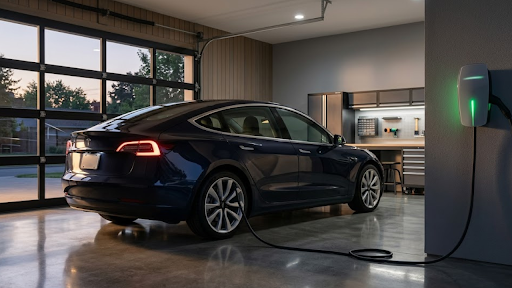
A professionally installed Level 2 charger running on a 240V circuit delivers real performance. Most EVs reach a full charge in 4 to 8 hours instead of taking an entire day or more.
A proper smart EV charger installation includes:
- A dedicated 240V outlet
- Load calculations to protect your electrical panel
- Compliance with local electrical codes
Homeowners often ask about cost here. The price depends on panel capacity, distance from the panel, and permitting requirements. The upside is that once installed, the charger delivers daily time savings that compound quickly.
This is where learning how to install an EV charger at home the right way matters. Shortcuts create safety issues and future expenses. Professional installation avoids both.
Lower Charging Costs and Long-Term Savings
Charging at home is almost always cheaper than public charging. That gap widens in Southern California, where public stations often carry premium pricing.
Understanding home electric vehicle charging implications starts with your electric rate plan. Many local utilities offer Time-of-Use plans that reward overnight charging with lower rates.
The result:
- Lower per-mile cost compared to public chargers
- Predictable monthly energy expenses
- Significant savings compared to gas
Yes, your electric bill will increase. But fuel costs disappear. When you compare charging an EV at home to filling a gas tank week after week, the math consistently favors home charging.
Tax Credits, Rebates, and Incentives That Offset Installation Costs
The upfront cost of installation is often softened by incentives. Federal programs like the Alternative Fuel Refueling Property Credit under Form 8911 can offset a portion of qualified expenses. Local utilities and regional programs may offer additional rebates.
This is why an investment in electric car charging stations is rarely paid entirely out of pocket. Deadlines and eligibility rules matter, so working with an installer familiar with current incentives can make a meaningful difference.
Increased Home Value and Buyer Appeal in Southern California
Real estate markets in Orange County, North San Diego County, and West Riverside and San Bernardino Counties reward homes that are future-ready.
An EV charger signals:
- Modern infrastructure
- Energy-conscious ownership
- Immediate usability for EV-driving buyers
Homes with electric vehicle chargers stand out because they remove a future project from the buyer’s list.
That readiness can translate into faster sales and stronger offers as electric vehicles become standard, not optional.
Smart Charger Features That Maximize Control and Efficiency
Modern chargers are not just power outlets. Smart chargers give homeowners visibility and control.
Common features include:
- App-based scheduling
- Automatic off-peak charging
- Energy usage tracking
These tools turn charging into a managed system rather than a guessing game. For homeowners focused on efficiency, this level of control is a major advantage of smart EV charger installation.
Better Battery Health With Consistent Home Charging
Fast public charging has its place, but relying on it exclusively is hard on batteries over time. Home charging supports steady, controlled charging cycles.
Many EV owners follow the 80/20 rule, keeping battery levels between 20% and 80% for daily driving. Home charging makes this easy to manage, improving long-term battery health and performance.
This often-overlooked benefit strengthens the overall value of EV charging stations at home beyond convenience alone.
Safety Advantages of Professional EV Charger Installation
EV chargers draw sustained electrical loads. Standard outlets are not designed for that kind of demand.
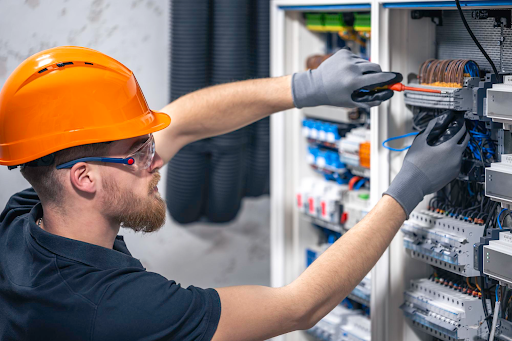
Professional installation includes:
- Dedicated circuits
- Proper load management
- Full code compliance
This protects your home, your vehicle, and your electrical system. Treating EV charging as a DIY project is one of the fastest ways to create safety risks and expensive repairs later.
Environmental Benefits of Home EV Charging
Charging at home reduces reliance on fossil fuels and cuts local emissions. When paired with solar, the environmental impact improves even further.
Cleaner air matters in dense urban areas and suburban neighborhoods alike. For many homeowners, sustainability is part of the return on an EV charging station investment, not just cost savings.
Why Local Installation Matters in Southern California
Electrical codes, permitting processes, and utility coordination vary widely across regions. Working with a local installer ensures:
- Faster approvals
- Correct utility coordination
- Installations designed for regional infrastructure
Local expertise matters when installing electric vehicle chargers for the home in Southern California’s unique regulatory and electrical landscape.
Why Home EV Charger Installation Is a Smart Long-Term Investment
A home EV charger delivers returns every single day. Time saved, money conserved, battery health protected, and property value strengthened.
For homeowners considering an EV charging station investment, the benefits are not theoretical. They show up in daily routines, monthly budgets, and long-term home value.
If you own an EV or plan to soon, installing a home charger is not just worth it. It is one of the most practical upgrades you can make to your home.
The Decision Comes Down to Timing
Home EV charger installation is not a question of “if” for most EV owners. It is a question of “when”.
Making the move early keeps the decision deliberate rather than forced. It allows installation to happen on your terms, not in response to rising demand, limited availability, or unexpected electrical constraints.
If you are already planning for an electric future, this is one upgrade where timing matters as much as the technology itself.
Ready to Take the Next Step?
Charging eventually stops being a workaround and becomes part of your home’s electrical system. When that shift happens, safety, cost, and long-term reliability matter.
Renewed Electric Co. installs EV chargers with proper load planning, permitting, and code compliance, so your setup works now and holds up later. We serve Orange County, South LA County, North San Diego County, West Riverside County, and West San Bernardino County.
If you’re ready to treat EV charging as a permanent part of your home, we’re here to help.
Popular Questions People Also Ask
Is an EV charger a good investment?
Yes. Convenience, lower operating costs, and increased home value make it a strong long-term investment.
How much does it cost to install a home EV charger?
Costs vary based on electrical panel capacity, distance, and permitting. Incentives can significantly reduce the final price.
Do EV chargers increase electric bills?
Electric bills increase, but fuel costs disappear. Overall transportation costs typically drop.
Does an EV charger add home value?
In competitive Southern California markets, EV-ready homes are increasingly attractive to buyers.